
MARCH 2026
SUSTAINABLE REMODELING IN SEATTLE
SMART CHOICES THAT CREATE A LASTING IMPACT
In a city known for its historic neighborhoods and environmentally conscious culture, Seattle homeowners often ask a deeper question when planning a home remodel or renovation: how can this project improve the home for the long term, for both the people living in it and the environment? Sustainable remodeling goes beyond buzzwords. It’s about how materials are sourced, how efficiently a home performs, and how long the improvements we build will last.
At Crescent Builds, a Seattle design‑build remodeling contractor, we approach sustainable design as a series of thoughtful decisions made throughout the remodeling process. Rather than relying on a single product or certification, we focus on strategies that improve efficiency, reduce waste, and extend the life of the homes we renovate. From energy-efficient upgrades to responsibly sourced materials, our approach to custom home remodels and home renovations prioritizes spaces that perform better for both the environment and the people who live in them.
Remodeling as One of the Most Sustainable Building Strategies
One of the most overlooked sustainability strategies is also one of the most powerful: remodeling an existing home instead of replacing it. For many of our clients planning home renovations in Seattle, investing in a well-planned remodel becomes one of the most environmentally responsible choices available.
Seattle is known for its historic neighborhoods, such as Craftsman homes in Phinney Ridge, mid‑century houses in Magnolia, and classic residences throughout Capitol Hill and Queen Anne. Many of these homes were built with durable materials and thoughtful craftsmanship that can support decades of additional use when updated.
When we approach a home renovation, we look first at how the existing structure can be preserved and improved rather than replaced. Remodeling allows us to retain what’s known as embodied energy; the energy already invested in producing and transporting the materials that built the home. By extending the life of existing structures through thoughtful remodeling, we can often avoid the additional resources and waste associated with demolition and new construction.
Energy Efficiency: Improving Home Performance During a Remodel
Energy efficiency is often one of the most impactful sustainability upgrades during a home remodel. Seattle’s housing stock includes many homes built before modern energy codes existed, meaning they may have little to no insulation, outdated windows, and inefficient mechanical systems.
During a home renovation, we often have the opportunity to address these conditions while bringing portions of the home up to modern building code. Today’s codes require higher levels of insulation, tighter building envelopes, and improved overall energy performance. For example, during an exterior project, removing existing siding can reveal wall cavities that were never insulated, particularly in homes built in the early 1900s. By introducing insulation into these assemblies and improving the building envelope, we can significantly reduce heat loss, improve comfort, and lower long-term energy consumption for the home. These projects also create opportunities to improve air sealing and upgrade to modern electric systems, such as high-efficiency heat pumps, which further reduce energy use while supporting Seattle’s broader shift toward cleaner home electrification.
Eco‑Friendly Materials and Healthier Interiors
Material selection also plays a meaningful role in the sustainability of a home remodel. The products used in construction can influence everything from indoor air quality to the environmental impact of the project and the long-term durability of the finished space.
In our remodeling work, we aim to select materials that minimize harmful emissions while supporting healthier living environments for both our clients and our team. A common example is the use of low‑VOC paints and finishes. VOCs (volatile organic compounds) can release chemicals into the air during and after installation, affecting indoor air quality. By prioritizing low‑VOC products whenever possible, we help reduce exposure for both homeowners and construction crews while creating a healthier finished environment.
Many clients also choose to extend these sustainability goals further by incorporating environmentally conscious materials into their custom home renovation. This may include FSC‑certified lumber sourced from responsibly managed forests, formaldehyde‑free insulation, or low‑emission adhesives and finishes that contribute to better indoor air quality and overall environmental responsibility.
Supporting Local Suppliers and Responsible Material Sourcing
Sustainability is not only about the materials used in a remodel. It also includes how and where those materials are sourced. The supply chain behind a project plays an important role in its overall environmental impact.
Whenever possible, we prioritize working with local suppliers and regional vendors throughout the Pacific Northwest. Sourcing materials closer to home helps reduce transportation emissions while also supporting the network of businesses and craftspeople that make up Seattle’s construction community. These partnerships often lead to better communication, more reliable sourcing, and a stronger understanding of how materials are produced and delivered.
In practice, responsible sourcing may include purchasing materials from regional distributors, partnering with local fabrication shops, or working with vendors who prioritize sustainable manufacturing practices. Whether it’s cabinetry built by a regional shop, stone fabricated locally, or lumber sourced through trusted suppliers, these decisions help create remodeling projects that are both environmentally thoughtful and rooted in the local building community.
Reducing Construction Waste Through Reuse and Salvage
Another important part of our approach to sustainable home remodeling in Seattle is minimizing construction waste wherever possible. Remodeling projects often generate materials that still have value. Instead of sending these materials to the landfill, thoughtful planning can create opportunities for reuse or donation.
On one recent project involving a mid‑century Seattle home, we encountered well-built structural roof trusses that were still in excellent condition. Rather than discarding them during a second‑story addition, we carefully removed, stored, and reused them as part of the new structure. While this approach required additional coordination and labor, it allowed us to preserve quality materials and prevent them from ending up in the landfill, an example of how thoughtful decisions during a custom home remodel can reduce waste while honoring the integrity of the original home.
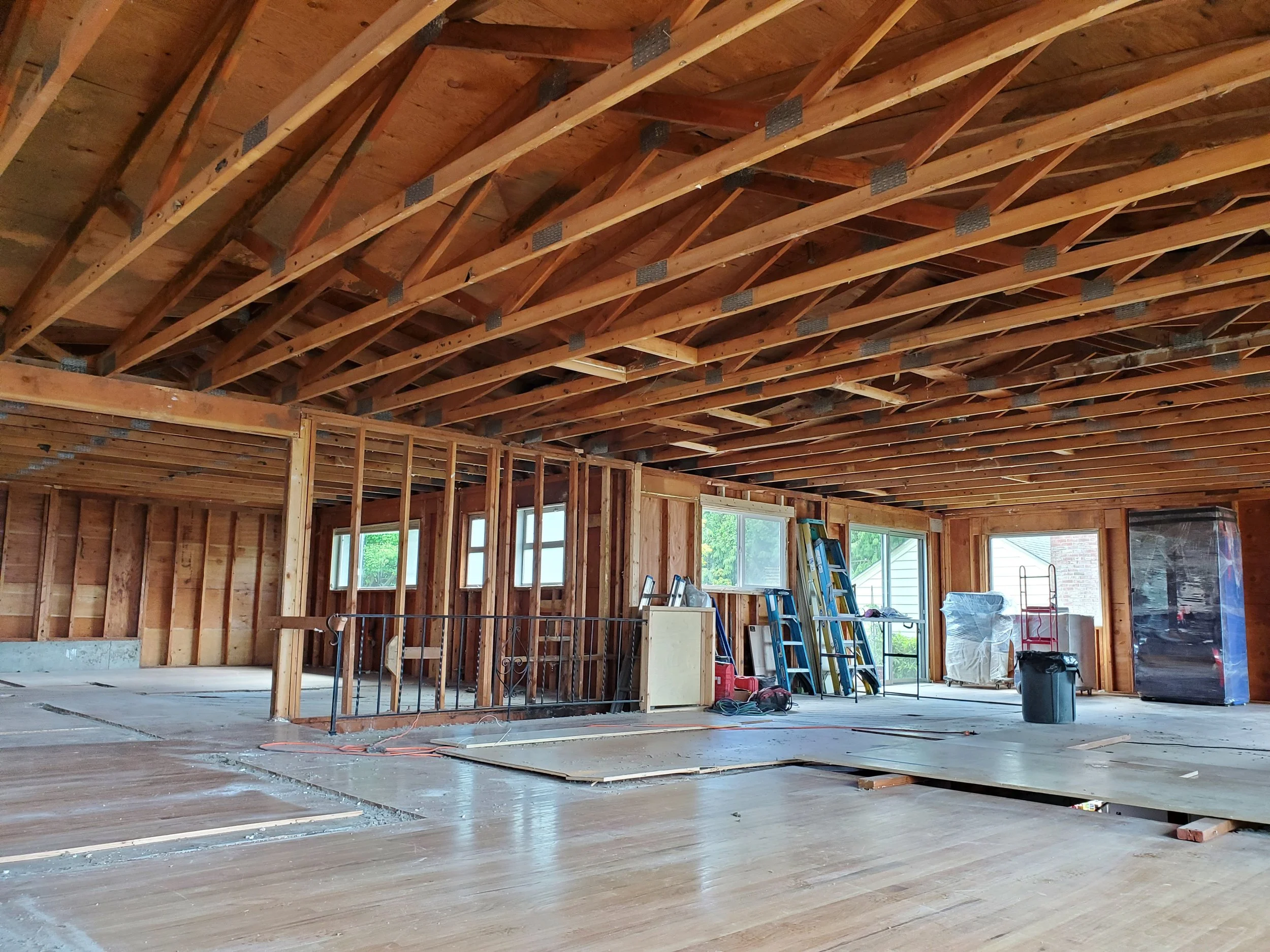
For our North Beach Whole Home Remodel in Seattle, our team preserved and exposed the original ceiling trusses, highlighting the home’s structural character while reducing construction waste through thoughtful reuse during the renovation.

We raised the existing ceiling trusses by 12 inches, improving interior sightlines and strengthening the connection to the surrounding landscape while maintaining the integrity of the original structure.
Whenever possible, we look for opportunities to extend the life of existing materials, such as salvaging cabinetry for reuse in utility spaces, donating usable items to local reuse organizations, incorporating architectural features into new layouts, or repurposing structural components when conditions allow.
Durability: Why Building to Last Is Sustainable
Not all sustainability decisions are immediately obvious. In many cases, the most environmentally responsible choice is to build with durability in mind, by selecting materials and construction methods that will perform well for decades rather than needing to be replaced after only a few years.
At Crescent Builds, durability is an intentional part of how we approach every custom home remodel. From the materials we recommend to the level of craftsmanship we bring to each project, our goal is to create spaces that are designed to age gracefully and continue performing long into the future. This means prioritizing quality materials, thoughtful detailing, and construction methods that support the long-term integrity of the home.
When a remodel is built to last, it reduces the need for future replacements, minimizes material waste, and lowers the long-term environmental footprint of the project. By focusing on longevity rather than short-term solutions, sustainable design becomes less about individual “green” products and more about creating homes that remain functional, resilient, and beautiful for generations.
Sustainability Certifications and Organizations That Matter in the Pacific Northwest
Sustainable building practices are also supported by organizations and certification programs that help raise standards across the construction industry. In the Pacific Northwest, two of the most influential organizations are the Northwest EcoBuilding Guild and the Master Builders Association’s Built Green program. Both organizations promote environmentally responsible building practices, provide educational resources for industry professionals, and help guide homeowners and builders toward more sustainable construction and remodeling choices.
At Crescent Builds, we actively support and stay engaged with these organizations as part of our commitment to responsible building practices. Their programs help inform evolving sustainability standards, provide valuable industry education, and encourage builders throughout the region to continually improve how homes are designed, renovated, and constructed with environmental responsibility in mind.
A Thoughtful Approach to Sustainable Home Remodeling in Seattle
Ultimately, our approach to sustainable home remodeling is not defined by a single product, material, or certification, but by a series of intentional choices made throughout the remodeling process, from how we design projects and improve energy performance to how we source materials and build. By prioritizing careful planning, responsible sourcing, and high‑quality craftsmanship, sustainable home renovations can extend the life of Seattle’s homes while improving comfort, efficiency, and long‑term performance.
If you’re considering a home remodel in Seattle, Crescent Builds would be happy to help you explore how sustainable design principles can be integrated into your project. Whether you’re planning a custom home remodel, a major renovation, or targeted upgrades to improve energy performance, our team approaches every project with the goal of creating spaces that are durable, functional, and built to last.
Reach out to our team to start a conversation about your project and how a well‑planned remodeling process can support both your goals and the long‑term sustainability of your home.