
FEBRUARY 2026
BLENDING OLD AND NEW: MODERN UPDATES FOR CLASSIC SEATTLE HOMES
Seattle’s neighborhoods tell a story. From early 1900s Craftsman homes to brick Tudors, mid-century modern gems, and historic masonry buildings, much of the city’s housing carries deep architectural character and history. For homeowners who love where they live, but want their homes to function for modern life, the challenge isn’t choosing between old and new. It’s learning how to blend the two with intention. At Crescent Builds, we specialize as a Seattle design build and remodeling contractor helping our clients thoughtfully update their classic homes while preserving what makes them special. Whether it’s a kitchen or bathroom remodel, a second-story addition, or a full custom home remodel, our role is to honor architectural heritage while introducing modern comforts that support how families live today.
Respecting the Architecture That Drew You In
One of the first steps in any successful home renovation is understanding why a client fell in love with their home in the first place. In Seattle, many homeowners are drawn to older houses because of their craftsmanship, proportions, and sense of permanence; details that are difficult to replicate with new construction methods. As a design build contractor, we never assume that clients want to erase that history. Instead, we confirm it. Most often, the answer is yes: they want the charm, the character, and the story to carry forward. Our job is to assess how the existing architecture can inform new design decisions, whether the project is a modest home remodel or a large-scale addition. This mindset sets the foundation for blending old and new in a way that feels cohesive rather than forced.
Thoughtful Additions That Feel Like They Belong
One of the most visible challenges in remodeling classic Seattle homes is adding space, particularly second-story additions. For example, many Craftsman homes, originally built as single-story or one-and-a-half-story houses, weren’t designed with vertical expansion in mind. You don’t have to drive far in Seattle to see examples of additions that missed the mark: mismatched rooflines, awkward proportions, or modern forms that clash with the original structure. As an experienced remodeling contractor, we’re intentional about avoiding those outcomes. When designing an addition, we study the home’s original era, materials, and detailing. For Craftsman homes, that might mean respecting roof pitch, window proportions, and trim profiles so the new work feels like a natural evolution of the house, not an afterthought. The goal of any custom home remodel or addition should be cohesion, not contrast for the sake of contrast.
Opening Up Interiors Without Losing Character
Inside older homes, functionality often lags behind modern expectations. Early 20th-century layouts favored compartmentalized spaces, such as closed-off kitchens, formal dining rooms, narrow hallways, and limited sightlines. Modern living, by contrast, tends to showcase openness, connection, and flexibility. A well-designed home remodel can bridge that gap by opening up kitchens and living areas while still honoring the home’s original design language. This is where subtle decisions make a big impact. In a kitchen remodel, for example, we might introduce an open-concept layout while choosing face-frame cabinetry instead of ultra-modern European slab cabinets. That single choice nods to the home’s history while still delivering modern functionality, storage, and flow.
Our Phinney Ridge Kitchen Remodel is a prime example of this approach in action. By opening up the kitchen to improve light, circulation, and connection to adjacent spaces, we created a more functional layout for everyday living while carefully honoring the home’s Craftsman roots. Design details like handcrafted archways, panel-ready cabinetry, and material continuity with existing architectural elements ensured the updated kitchen felt cohesive with the rest of the home by preserving its warmth and character while supporting the needs of a growing family.
Blending Old and New in Seattle’s Mid-Century Homes
Seattle’s architectural story doesn’t stop at Craftsman homes. The city also has a rich collection of mid-century houses built from the 1950s through the late 1960s. These homes, with their clean lines and indoor-outdoor connections, often lend themselves especially well to modernization. For mid-century home renovations, blending old and new can be both playful and precise. Updated mechanical systems, improved insulation, and modern finishes can coexist beautifully with original structural elements and proportions. When done well, these projects feel both timeless and fresh—bringing mid-century homes fully into the present day without losing their identity.
A great example of this approach is our Olympic Hills Whole House Remodel, which began as a small cosmetic kitchen update and evolved into a comprehensive home renovation. Grounded in a mid-century modern aesthetic, the remodel focused on preserving the home’s original character while refining how it functions today. Clean lines, bold accent moments, and custom walnut cabinetry reinforce the home’s mid-century identity, while salvaged original flooring and thoughtful space planning maintain a strong connection to its past. These intentional design choices allowed the updated spaces to feel cohesive, authentic, and true to the era, honoring the home’s architectural roots while subtly adapting it for contemporary living.
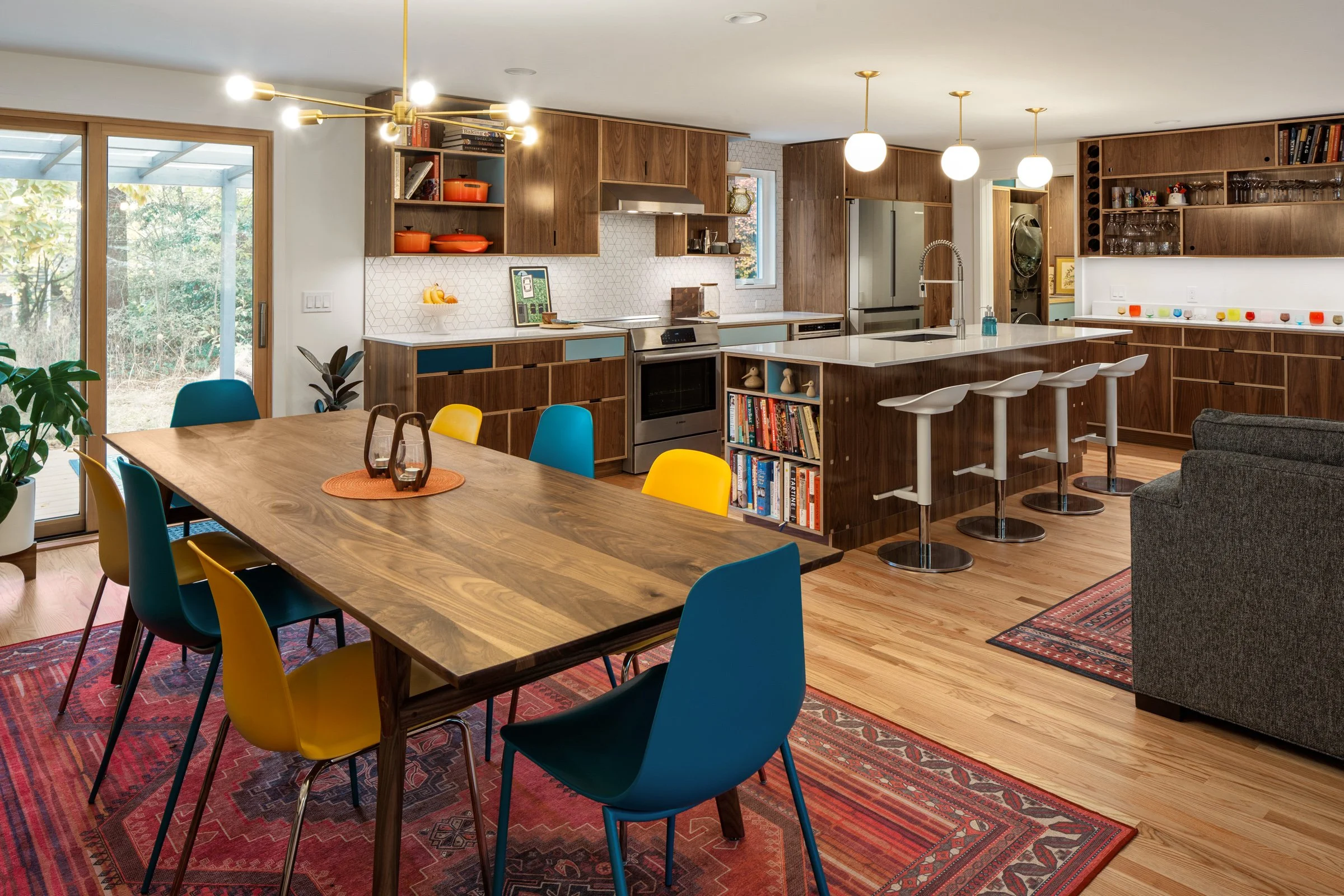
Removing interior walls allowed us to reconfigure an open-concept living, dining, and kitchen area. The remodel also included modern updates to HVAC, plumbing, and electrical systems.
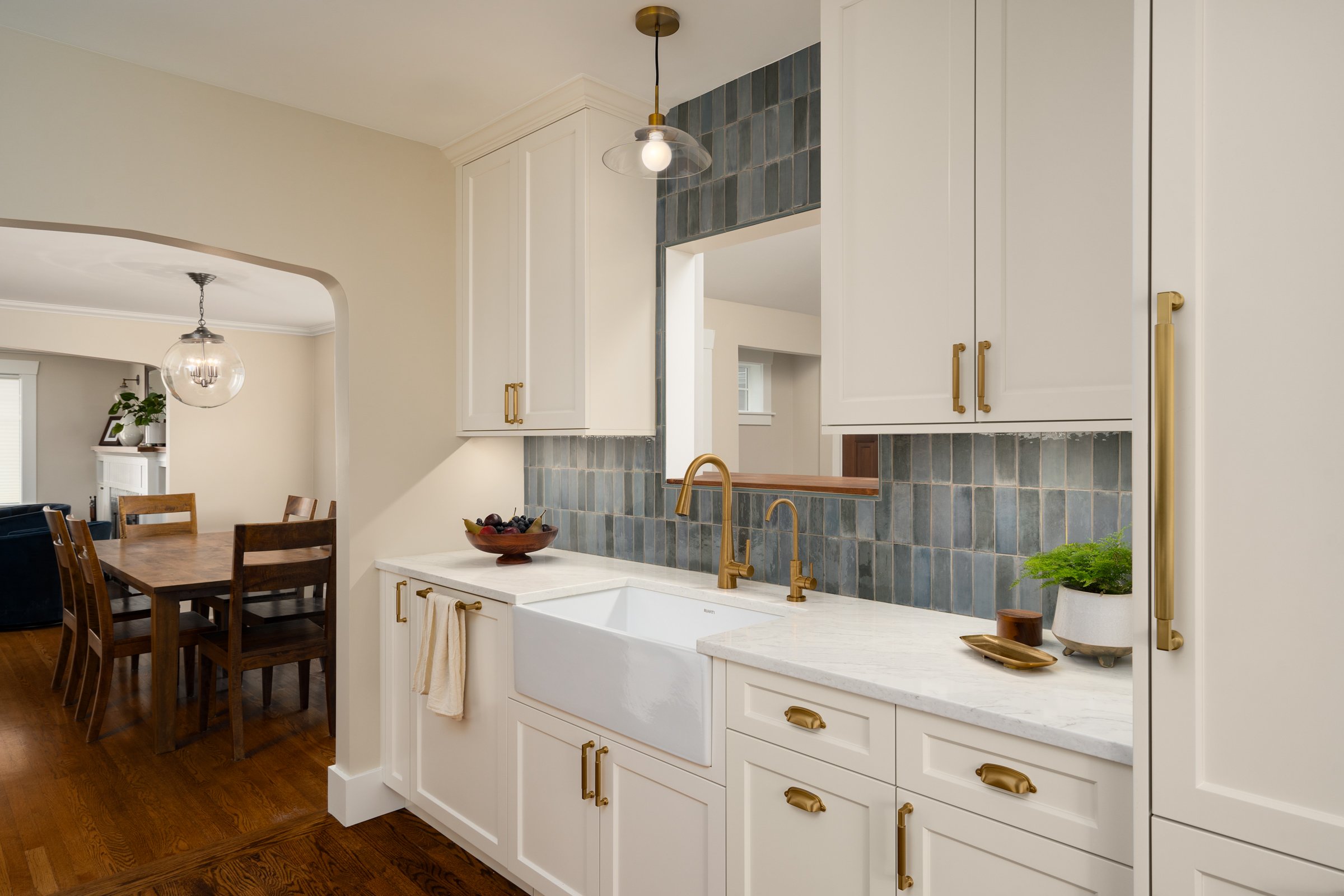
A widened open with subtle arches improves connectivity between the kitchen and the dining room, while new tile and modern hardware give the kitchen a modern flair.

Custom walnut cabinetry in rich tones with bold pops of color.

A banjo-style vanity featured in the updated bathroom.
Navigating Historic Districts and Preservation Guidelines
Some Seattle homes come with an added layer of complexity: historic districts and preservation oversight. Neighborhoods like Pioneer Square or Harvard-Belmont may require review by historical preservation boards, particularly for exterior-facing changes. In these cases, our role as a Seattle remodeling contractor expands beyond design and construction. We collaborate closely with preservation boards to ensure updates align with the broader goals of the district. Typically, these guidelines focus on what’s visible from the street, allowing more flexibility on interiors while preserving the neighborhood’s character. Projects completed within these guidelines demonstrate how modern interiors can thrive within historic shells, creating spaces that feel contemporary, functional, and deeply connected to their past.
Leaving History Exposed: When Imperfection Adds Value
One of the most rewarding approaches to blending old and new is knowing when not to hide history. In projects like the Pike Street Loft, where the architectural and interior design were led by Olson Kundig, we partnered closely on the general contracting and construction side to bring the vision to life, we intentionally left original masonry and structural elements exposed, allowing the building’s early-1900s construction to remain part of the daily experience. This approach creates a powerful contrast: modern forms and finishes layered against visible history. The result is a space that feels elevated, authentic, and rich with narrative. We see this as more than design-driven approach. It’s about preserving the story of how a place came to be.
Modernizing for the Next 100 Years
Blending old and new isn’t only about aesthetics. One of the greatest benefits of remodeling older homes is the opportunity to future-proof them. With major home renovations, we can upgrade structural systems, seismic resilience, insulation, windows, electrical, and plumbing, which brings older homes up to modern code and performance standards. We often tell clients that a comprehensive remodel is about setting their home up for the next century, not just the next decade. Improving energy efficiency, safety, and durability reduces environmental impact while ensuring the home continues to serve generations to come. Thoughtful material selection, high-performance building assemblies, and efficient mechanical systems not only lower long-term energy use, but also extend the lifespan of the home itself. By investing in durable, well-crafted solutions and upgrading systems with longevity in mind, these remodels support sustainable living while preserving the inherent value and character of Seattle’s older homes for decades to come.
Designing for Clients and the Community
At the end of the day, every home remodel is personal. Our responsibility is to design for the client’s goals while offering guidance informed by experience, neighborhood context, and architectural integrity. Sometimes that means gently steering away from designs that might feel out of place, even if they’re trendy. Blending old and new successfully requires perspective, restraint, and respect, for the home, the client, and the surrounding community. When done well, the result isn’t just a remodeled house. It’s a home that feels rooted in its history, elevated for modern life, and ready for the future.
If you’re considering updates to your classic Seattle home, we’d love to be part of the conversation. Contact us to explore how thoughtful remodeling, skilled craftsmanship, and collaborative partnerships can help bring your vision to life.

A complete tear-off of the existing partial second story allowed for a new floor system and a full-height expansion at our Wallingford Second Story Addition. Key features include three new bedrooms, including a primary suite and an office, and a south-facing porch.