
MAY 2026
RETHINKING YOUR HOME’S DESIGN FOR MODERN LIVING
HOW LAYOUT, LIGHT, AND FLOW SHAPE THE WAY WE LIVE TODAY
Many of the homes we work on throughout Seattle carry the layout patterns of a different era — one that no longer fully reflects how people live today. The city's housing stock is filled with architectural character: Craftsman homes with intricate millwork, brick Tudors with quiet solidity, and mid-century spaces shaped by proportion and restraint. Yet many of these homes were organized around routines and expectations that have gradually shifted over time.
Kitchens were tucked behind walls and treated as service spaces. Dining rooms carried a degree of formality. Hallways divided public and private areas, and a single bathroom often served an entire household. While the craftsmanship and character of these homes remain deeply appealing, the way families gather, cook, work, entertain, and spend time together has evolved significantly. That tension between an older home’s original framework and the realities of modern living is one of the most common reasons homeowners reach out to Crescent Builds.
Whether the project begins as a kitchen remodel, bathroom remodel, or larger home renovation, the conversation often expands into something broader: how can the existing home better support the people living inside it?
From Compartmentalized to Connected
For much of the twentieth century, residential architecture prioritized separation. Kitchens were enclosed and hidden from view, dining rooms were reserved for more formal occasions, and living spaces were intentionally distinct from one another. Today, however, many homeowners are drawn toward something more connected.
Modern living often centers around shared, multifunctional spaces where cooking, gathering, entertaining, and daily routines overlap naturally. Families desire kitchens that remain connected to conversations with sightlines that allow parents to cook while staying engaged with children or guests. Our clients seek homes that feel open and intuitive without sacrificing warmth or comfort.
That shift is why so many Seattle home remodel projects begin by reconsidering walls, circulation, and room relationships. Yet thoughtful remodeling is rarely about creating openness simply for the sake of trend. In many cases, selective separation still provides rhythm, privacy, and intimacy within a home. The challenge is understanding which elements continue to support the way a family lives and which belong to a different era altogether.
Designing Around Real Daily Habits
One of the most important parts of any successful design-build process happens long before materials or finishes are discussed. It begins with understanding how people actually live.
Some homeowners cook extensively and want a kitchen designed around performance, featuring generous prep space, integrated storage, durable surfaces, and appliances built for daily use. Others entertain differently or spend less time cooking altogether. In these latter homes, priorities may shift toward simplicity, flexibility, or creating more gathering space elsewhere in the home.
One of our recent kitchen remodels in Greenwood reflected this idea particularly well. Our clients took an unusually honest view of their routines and recognized that they did not need a large chef’s kitchen or formal dining room. Instead of prioritizing oversized appliances or excessive storage, the design centered around a more streamlined kitchen with generous bar seating and a casual dining nook that better supported the way they actually lived day to day. The result feels calm, intentional, and deeply personal, not because more was added, but because the layout was tailored specifically to their needs.
That level of customization is one of the greatest advantages of thoughtful design-build remodeling. The goal is never to force a home into a predetermined formula, but to shape it around the rhythms of the people who use it.
The Changing Role of the Dining Room
Few spaces reveal changing domestic patterns more clearly than the formal dining room. In many older homes, these rooms have gradually become catchall spaces filled with storage, temporary workstations, unopened deliveries, or furniture that sees little use throughout the year. Meanwhile, families naturally gather in other areas; often around a kitchen island, breakfast nook, or family room.
We recently worked with a Seattle family whose formal dining room had become one of the least functional spaces in their home. Meals happened elsewhere, while the room itself had evolved into a mix of storage, a craft area, and miscellaneous overflow. As we walked through the home together, the conversation shifted away from preserving the room’s original purpose and toward understanding what would actually improve this livable square footage. Our solution was to reimagine the space entirely: integrating laundry functions, custom storage, a craft workspace, and a small wet bar into a room that now feels purposeful again. Projects like these may not involve major structural changes, but they can meaningfully improve how a home functions and supports long-term use patterns.
Light as a Foundational Design Element
Limited light is another common challenge that many older Seattle homes share. Lower ceiling heights, compartmentalized layouts, smaller openings between rooms, and outdated lighting plans can leave interiors feeling darker and more enclosed. Modern home renovation increasingly treats light, both natural and artificial, as a foundational part of the design process rather than a finishing detail.
Lighting plays a significant role in how a home feels and functions over time. Rather than relying on a single overhead fixture, modern lighting plans are typically layered to support different activities and moods throughout the home. Ambient lighting provides overall illumination, task lighting improves functionality in areas like kitchens and workspaces, and accent lighting adds warmth and atmosphere. Dimmable controls and lighting zones also allow spaces to shift naturally throughout the day, such as brighter and more functional in the morning and softer and more relaxed in the evening. Advancements in LED technology have also made it possible to dramatically improve both lighting quality and energy efficiency. Just as importantly, thoughtful space planning can completely change how light moves through a home. Opening walls, improving circulation, and creating stronger visual connections between rooms often allows natural light to travel much deeper into the interior.
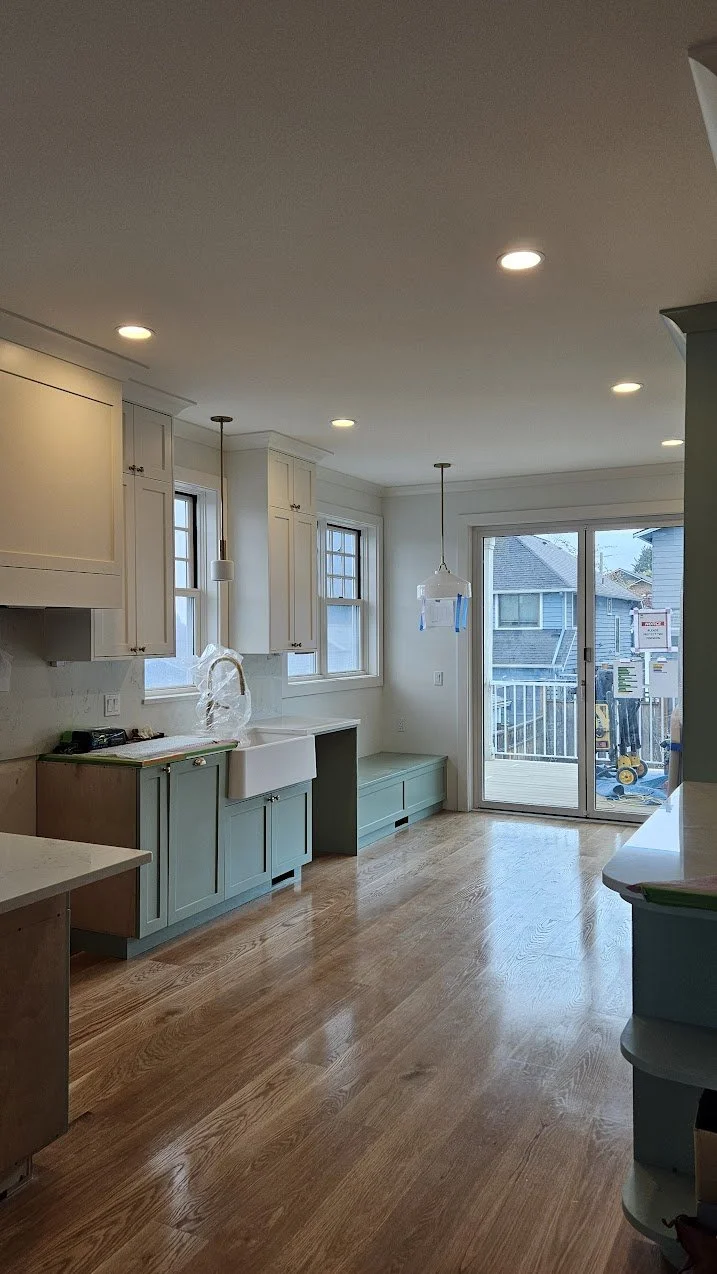
One recent kitchen remodel in View Ridge reflected this transformative approach particularly well. The original kitchen was enclosed and separated from both the dining room and adjacent sunroom, limiting how natural light moved through the space. By removing the dividing wall and reworking the kitchen layout, we were able to open the rooms to one another and create a much brighter, more connected environment. The change was immediate. Natural light from the sunroom now flows through the kitchen and dining area, making the entire main level feel more open, calm, and inviting. While integrated storage and carefully selected finishes helped support the functionality and character of the remodel, the most significant transformation came from improving the layout itself and allowing light to move more freely throughout the home.


Before images of a previously small, enclosed kitchen with limited connection to the surrounding dining area and sunroom.
The new kitchen features bench seating to facilitate casual dining while a peninsula provides ample bar seating.
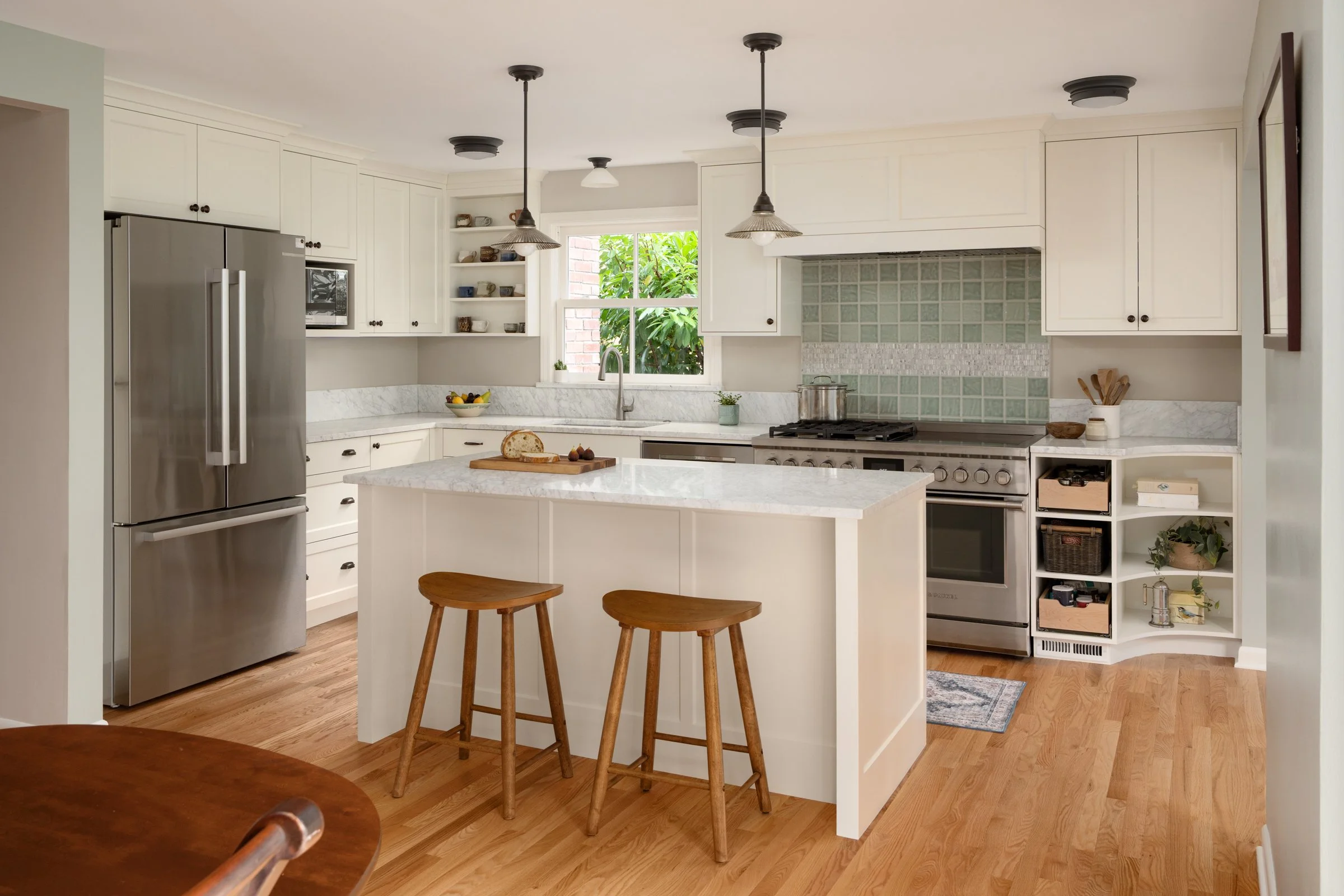
After image featuring improved connectivity and an abundance of natural light. To learn more about our View Ridge remodel, click here.
Bringing the Outdoors Into Everyday Living
Another major shift in residential design has been the growing emphasis on indoor-outdoor connection. Increasingly, homeowners view patios, gardens, and outdoor living areas not as secondary spaces, but as extensions of the home itself. Large sliding doors, expanded windows, and improved circulation patterns help create a more seamless relationship between interior and exterior spaces. This approach not only expands usable living space, but also strengthens natural daylighting and encourages year-round use of exterior areas. In the Pacific Northwest, covered thresholds and weather-aware transitions are often key to making these spaces truly livable throughout the seasons.
In one recent whole-home renovation in North Beach, a large bi-fold door system transformed the relationship between the main living space and rear patio, allowing outdoor gathering areas to function as part of the home’s daily living environment and creating a more fluid setting for entertaining and everyday use. In another Shoreline project, a smaller intervention used sliding doors off a den to improve garden access while drawing significantly more natural light into the interior.
In the Pacific Northwest, outdoor living often looks different than it does in warmer climates, but thoughtful connection to landscape, shelter, and natural light continues to shape how homes feel and function throughout the year.
Bathroom Design and Spatial Efficiency
The same principles of intentional planning apply directly to bathroom remodel work as well. Some of the least successful bathrooms we encounter are not necessarily too small, but inefficiently designed. Oversized tubs consume entire corners, circulation space is wasted, and layouts are organized around square footage rather than daily experience.
A well-designed primary bathroom rarely depends on size alone. More often, success comes from careful attention to proportion, storage, lighting, and movement. Common priorities in our clients' bathroom remodels often include:
Walk-in showers
Double vanities
Improved storage and integrated cabinetry
Better lighting and layered illumination
More intuitive circulation and layout flow
Greater privacy within the suite
In a recent Cherry Hill remodel, these principles came together in a compact upstairs bathroom that was completely rethought for daily use. The original layout included a separate shower and freestanding tub that ultimately consumed valuable square footage without improving function. By simplifying the design into a combined tub-and-shower layout, we were able to better support everyday needs while freeing up space for a tall linen cabinet, custom storage above the toilet, and a double vanity with recessed medicine cabinets. The updated layout makes the room feel more open and efficient, despite its limited footprint. Layered tilework, custom millwork, and a full-width shower niche add warmth and detail, but the most meaningful shift comes from how the space now supports routine use — with everything in its place and nothing feeling overbuilt or underutilized.
At the same time, thoughtful bathroom renovation often means making spaces more efficient rather than larger. In many projects, reclaiming unnecessary bathroom square footage allows adjacent bedrooms, closets, or circulation areas to function far more effectively. Successful bathroom design is ultimately less about excess and more about fit.
Updating Older Homes for Contemporary Living
A broader structural shift also shapes much of the remodeling work happening across Seattle today. Many older homes were built around expectations that no longer align with how modern households function. Two-bedroom, one-bath homes were once entirely common, designed for smaller households and more compartmentalized daily routines. Today, many buyers and homeowners are searching for layouts that better reflect contemporary living, including three bedrooms, a second bathroom, and more integrated primary suite configurations that support privacy, comfort, and daily efficiency. As a result, conversations around reconfiguration often extend beyond simple updates and into more holistic questions about how a home should function overall. Circulation patterns, storage needs, and room relationships all become part of the discussion, especially in homes where the original layout was never intended for how the space is used today.
That conversation comes up frequently with homeowners who love their neighborhood and the character of their home, but feel constrained by the current layout. Sometimes the solution is a primary suite addition that creates a more functional retreat within the existing footprint. Other times, it involves reworking a basement to create a legal bedroom with proper egress, or carving out a second bathroom from underutilized square footage to better support everyday living.
In some of our design-build projects, these changes also include subtle but important shifts in how rooms connect to one another — improving flow between bedrooms, bathrooms, and shared living areas so the home feels more intuitive to move through. Even when homeowners plan to remain in their homes long term, these decisions often improve both daily livability and long-term resale value, helping the home evolve alongside the needs of the people living in it.
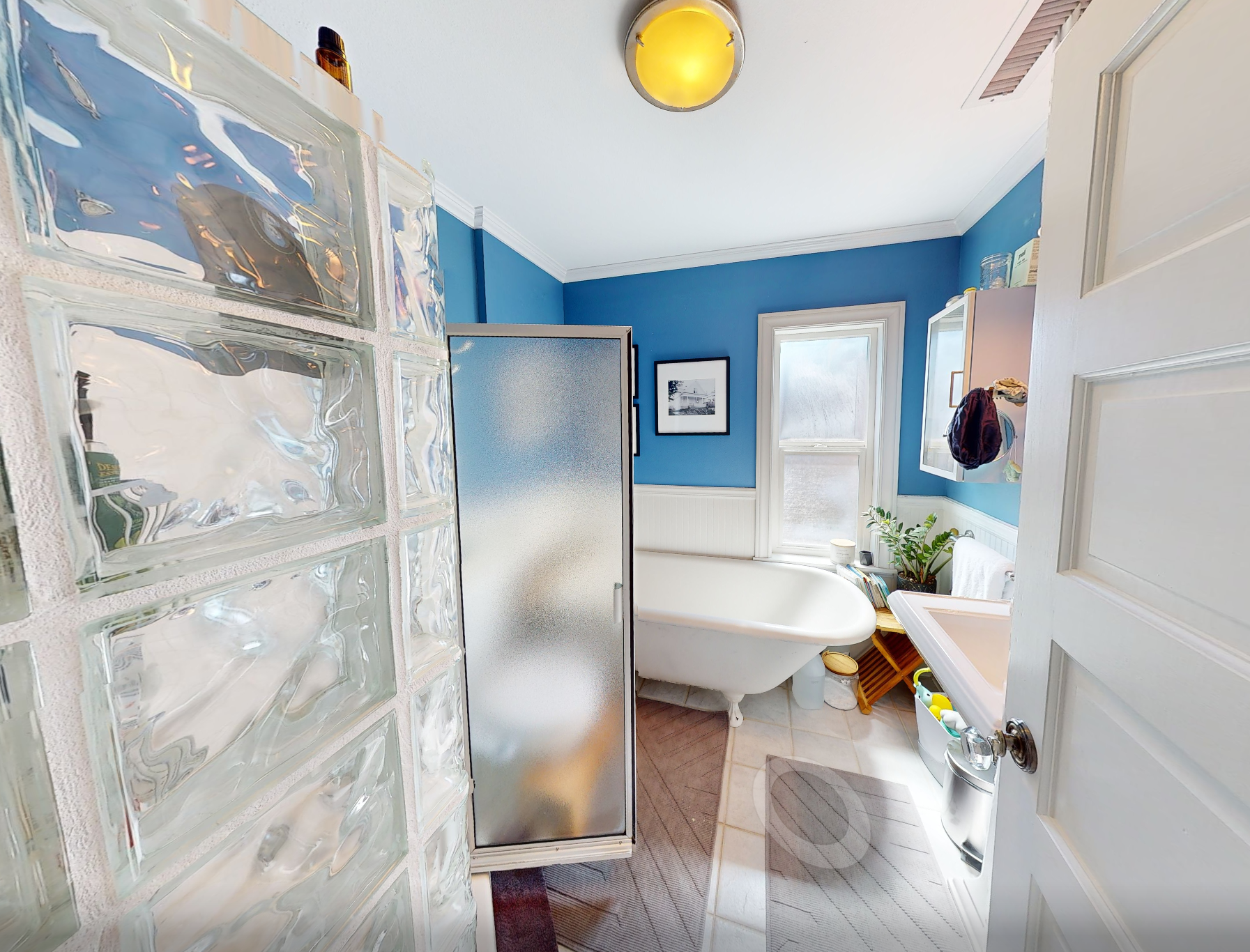
The original layout, featuring a separate shower and freestanding tub, made the room feel crowded and limited storage opportunities.
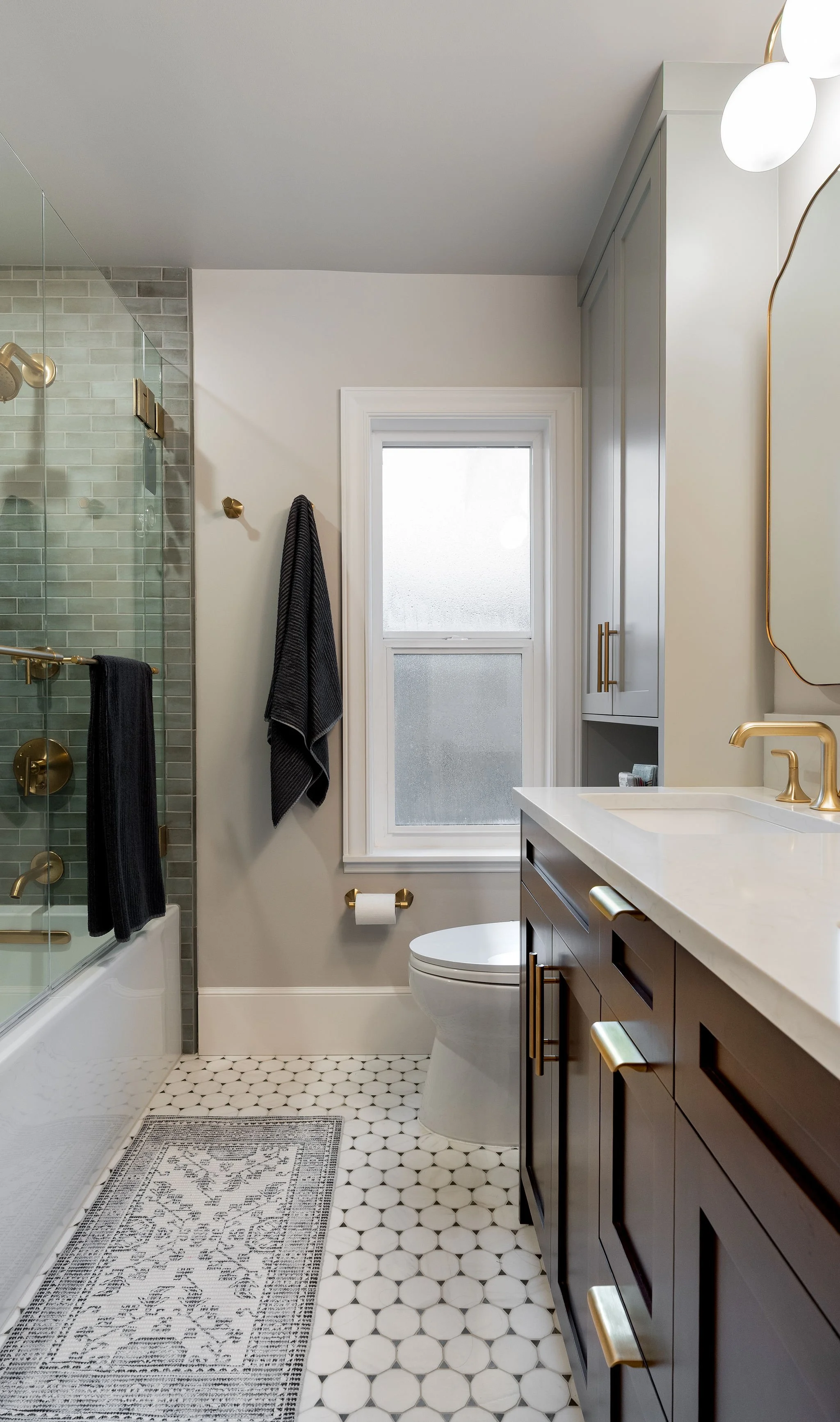
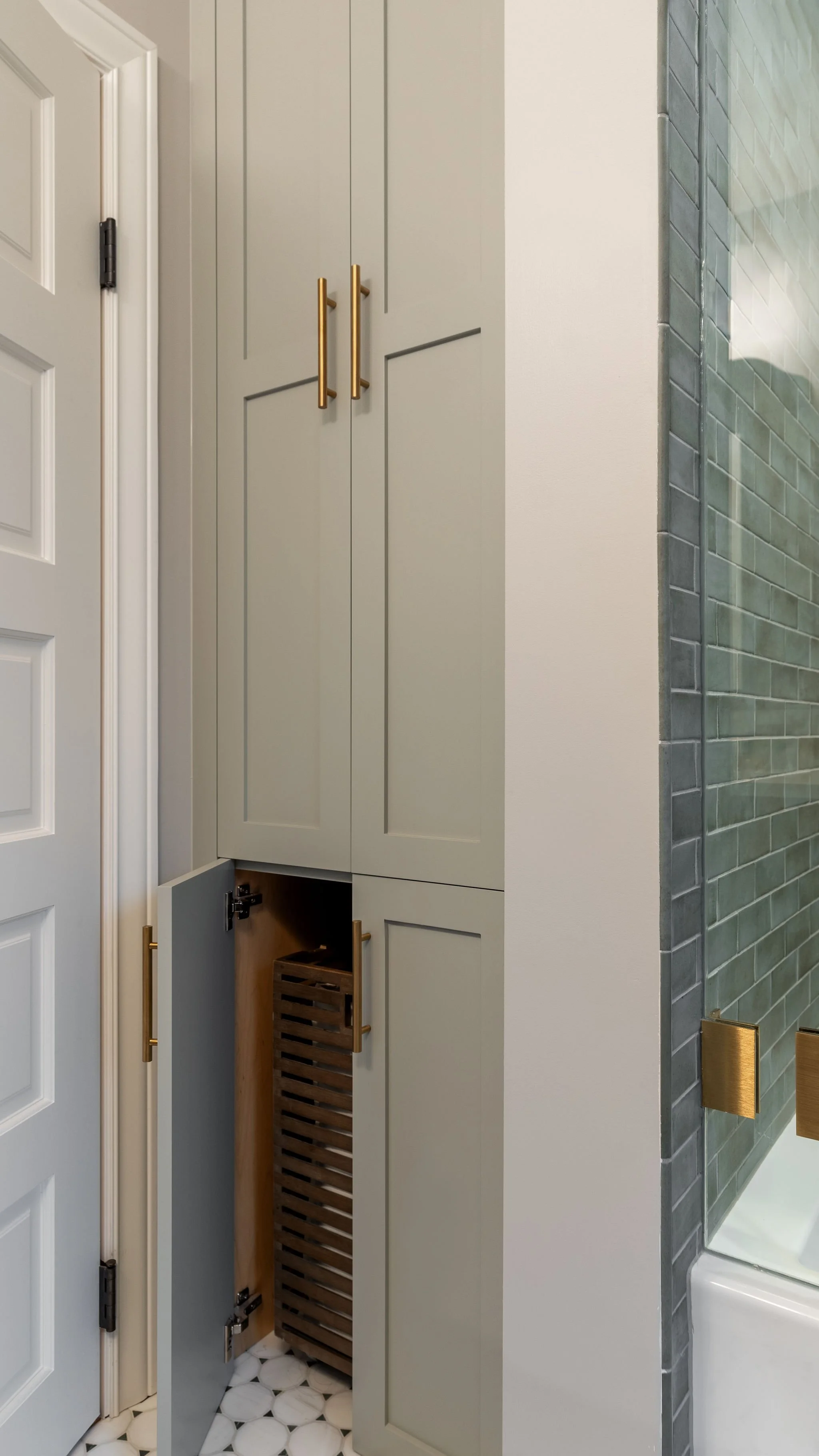
Converting the space to a tub-and-shower combination simplified the footprint while still supporting bath time for the homeowners’ young child. Custom cabinetry also allowed us to include a double vanity and dedicated linen closet. Click here to learn more about our Cherry Hill remodel, including a refinished hardwoods throughout and a reimagined stairwell with a custom carpet runner.
A More Thoughtful Approach to Remodeling
What connects all of our projects is not a single aesthetic or layout strategy, but a process rooted in observation, collaboration, and thoughtful problem-solving. Before discussing finishes or fixtures, we spend time understanding how our clients live, what feels disconnected in their current home, and what kinds of spaces would better support their routines over time. The most successful remodels are rarely defined by a single dramatic feature. More often, they succeed because the home as a whole was reconsidered with intention.
At Crescent Builds, our work as a Seattle design-build firm is grounded in creating homes that feel more connected, functional, and aligned with modern living while still respecting the character of the original structure. Whether you are considering a kitchen remodel, bathroom remodel, or larger home renovation, thoughtful changes to layout, light, and flow can fundamentally reshape how your home supports everyday life. If you're beginning to think about what’s possible in your own home, we’d love to connect. Reach out to us today to start a conversation about your space, your goals, and how a more intentional design could support the way you live.