
JUNE 2026
DESIGNING HOME REMODELS AROUND YOUR LIFESTYLE, NOT JUST YOUR SPACE
When homeowners begin considering a remodel, their motivation often starts with the space itself: a larger kitchen, a finished basement, or a primary suite that finally feels complete. Those goals matter, and they're where many projects begin. But after nearly two decades of remodeling homes throughout the greater Seattle area, we've found that the projects that continue to perform well years later aren't defined by square footage alone. They're shaped by a deeper understanding of what the home needs to support both today and in the future.
At Crescent Builds, lifestyle-driven design isn't something we layer on at the end of the process. It's the foundation of our design-build approach. Before discussing layouts, finishes, or architectural details, we focus on understanding the routines, priorities, and long-term goals that will guide every decision that follows.
It Starts with Listening
Before we move a wall or select a finish, we listen. The most successful remodels begin with understanding far more than a wish list. We want to understand how the home functions today, where it falls short, and what the future may require. Are weekends spent outdoors? Is the household expected to grow? Do frequent guests visit? Are there hobbies, work-from-home needs, or long-term plans that should influence the design? We ask intentional questions because the most meaningful insights don't always emerge on their own. Our goal is to help homeowners think beyond immediate wants and consider how the home should perform over the next several years. Once those priorities are identified, we document them carefully so they become the benchmark against which future design decisions are measured.
Designing for Today and the Years Ahead
With that foundation in place, our team develops solutions that address current challenges while remaining adaptable for the future. A remodel shouldn't simply solve today's frustrations. It should account for what's next. Perhaps a couple expects to start a family in the coming years. Maybe there is a future addition or renovation phase planned when timing and budget align. Perhaps there are accessibility considerations that aren't urgent today but may become important later. When these possibilities are discussed early, we can create a plan that accommodates change rather than requiring major modifications down the road. Thinking ahead doesn't mean building everything at once. It means making strategic decisions now that preserve flexibility later.
Before moving forward, we pressure-test every design to ensure it works both spatially and financially. Only then does a concept advance into permitting and construction. That sequence—listen, document, design, validate, build—helps ensure each project remains aligned with the homeowner's goals rather than drifting toward a generic solution.
When the Right Design Breaks the Rules
Because our recommendations are driven by individual priorities rather than convention, they don't always follow expected formulas—and that's often where the best results emerge. On one whole-home remodel, that meant eliminating the dining room entirely. Conventional wisdom suggests every home should include a dedicated dining space, and if resale assumptions had been the primary driver, we likely would have preserved one. But our clients knew they would rarely use it. Formal dining simply wasn't part of their routine, making the room an inefficient use of valuable square footage. Instead, we repurposed that area to support activities that were far more important to them, creating spaces that provided greater utility and enjoyment on a daily basis, including an entertainment room. The lesson wasn't about removing a dining room. It was about questioning assumptions and designing around actual priorities rather than default expectations.
Letting the Details Follow the Priorities
When a design is grounded in a clear understanding of how a home is used, the most meaningful features are often the ones absent from a standard floor plan.
For our North Beach Whole Home Remodel, the homeowners wanted a more efficient way to move outdoor gear and equipment in and out of the house after weekends away. Rather than routing everything through the main living areas, we created a dedicated gear storage zone on the lower level and added an entirely new secondary entrance. By excavating into the hillside and introducing a doorway where none had existed before, we established a direct connection between the outdoors and the storage space, creating a more seamless transition between recreation and home.
For our Ballard Garden Studio Garage Renovation, the design incorporated areas for play and relaxation with all family members in mind. These weren't features selected from a list of trending amenities. They were responses to specific interests and activities that mattered to the family. Examples like these appear throughout our portfolio because every project begins with the same objective: understanding what will make a home function better for the people using it every day. The answers are rarely found in trends or standard layouts. They're found in the details that make a home feel intuitive, purposeful, and tailored to the household it serves.
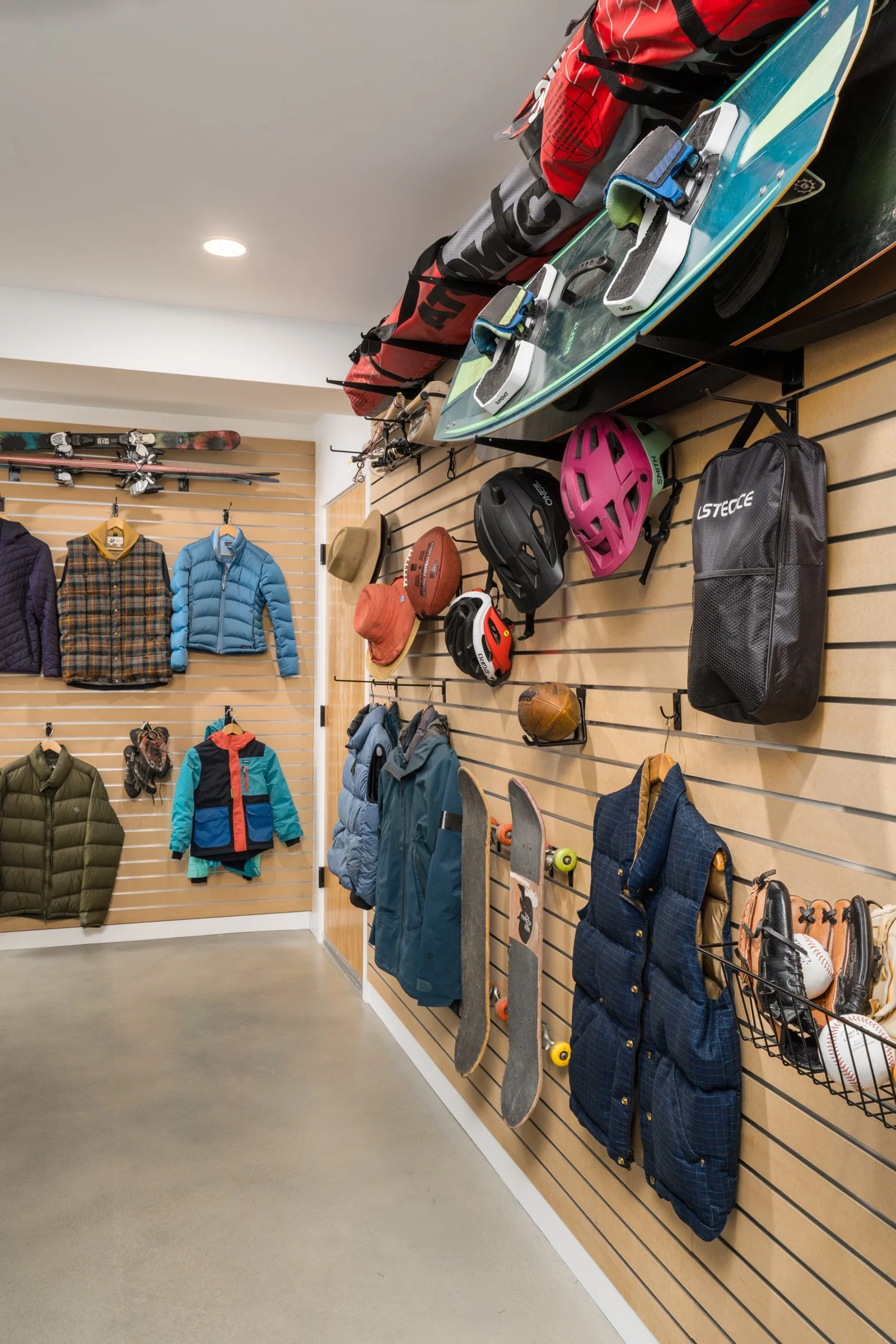
Inspired by specialty outdoor retailers, the custom storage wall turns everyday gear into a curated display while maximizing organization and ease of access.
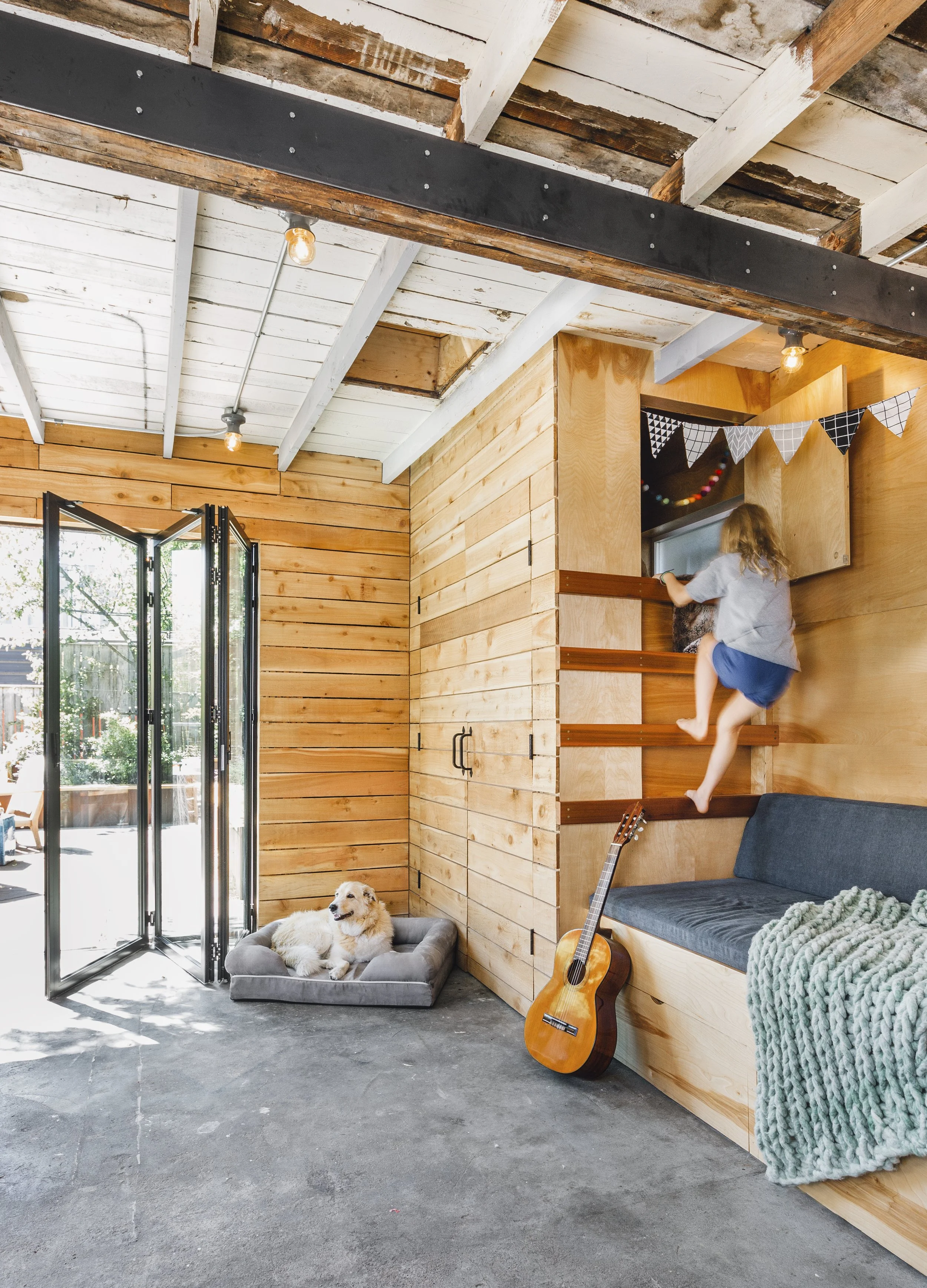
A custom ladder wall doubles as a playful architectural feature, providing access to a hidden loft designed as a private retreat for the home's youngest residents.
Your Home, Your Project
At the heart of our process is a simple belief: this is your home and your project—not ours. Our role isn't to impose a signature style or force a predetermined solution. It's to understand your goals, respect your priorities, and guide you through a process that results in a home that feels authentic to you. That's why every project begins with understanding what the home is meant to support. A thoughtfully designed remodel does more than improve functionality. It reduces daily friction, adapts to changing needs, and creates spaces that continue to feel relevant and useful long after construction is complete.
If you're considering a Seattle home remodel and want a process rooted in thoughtful planning and personalized design, we'd love to connect. Reach out to us today to start a conversation about your project—we're here to guide you every step of the way.